
Understanding these concepts will help you navigate the API effectively.
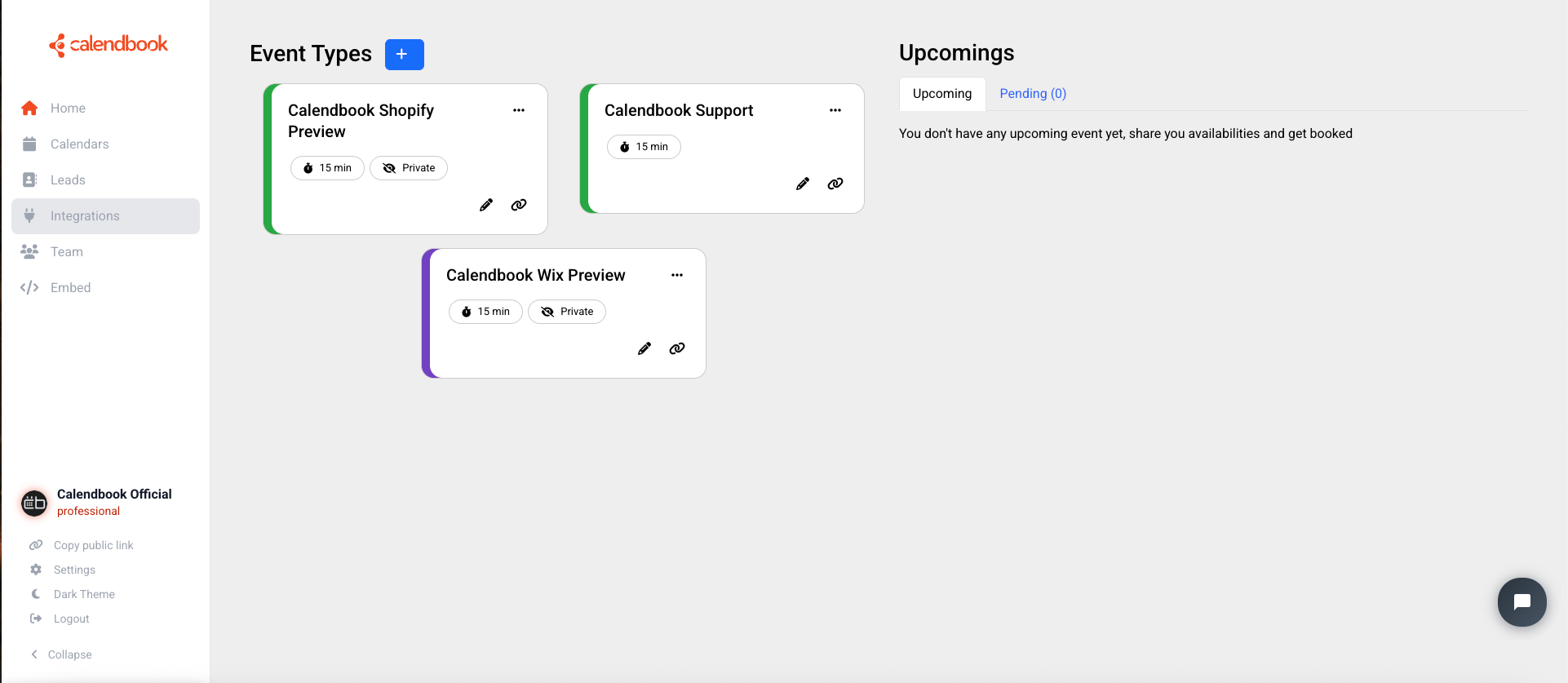
Event
An Event defines a type of meeting that can be booked.It includes properties such as:
- Title and description (e.g. “15 min chat”)
- Duration (in minutes)
- Location settings (custom location, video link, etc.)
- Buffers before and after the meeting
- Whether it is personal or team-based
Event Availability
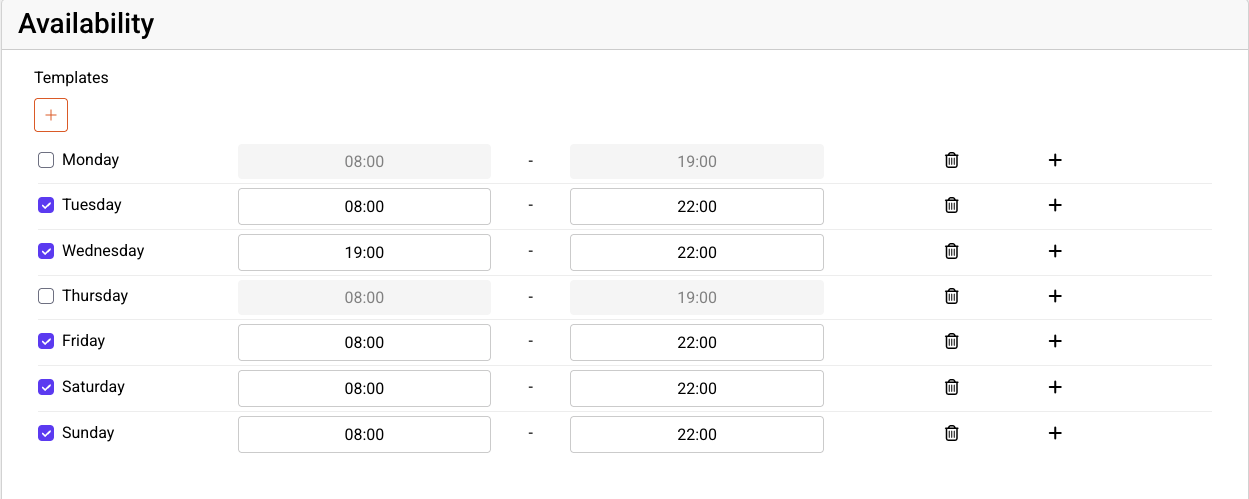
Event Availability defines the time ranges when an event can be scheduled.It is configured per event and can include:
- Weekly recurring availability (e.g. Mon–Fri 9:00–17:00)
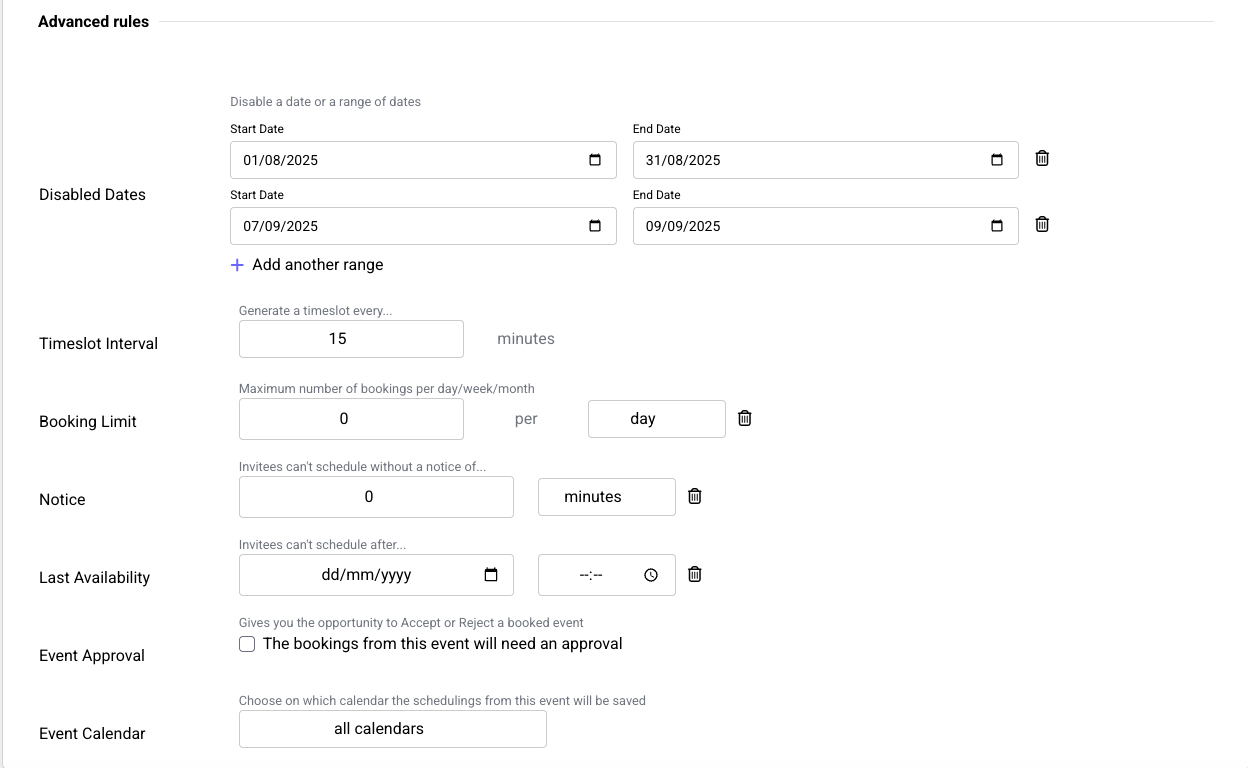
- Disabled dates or months
- First and last available booking dates
- Advanced rules for fine-tuning availability
Simple and recurrent availabilities
Advanced availabilities
Booking
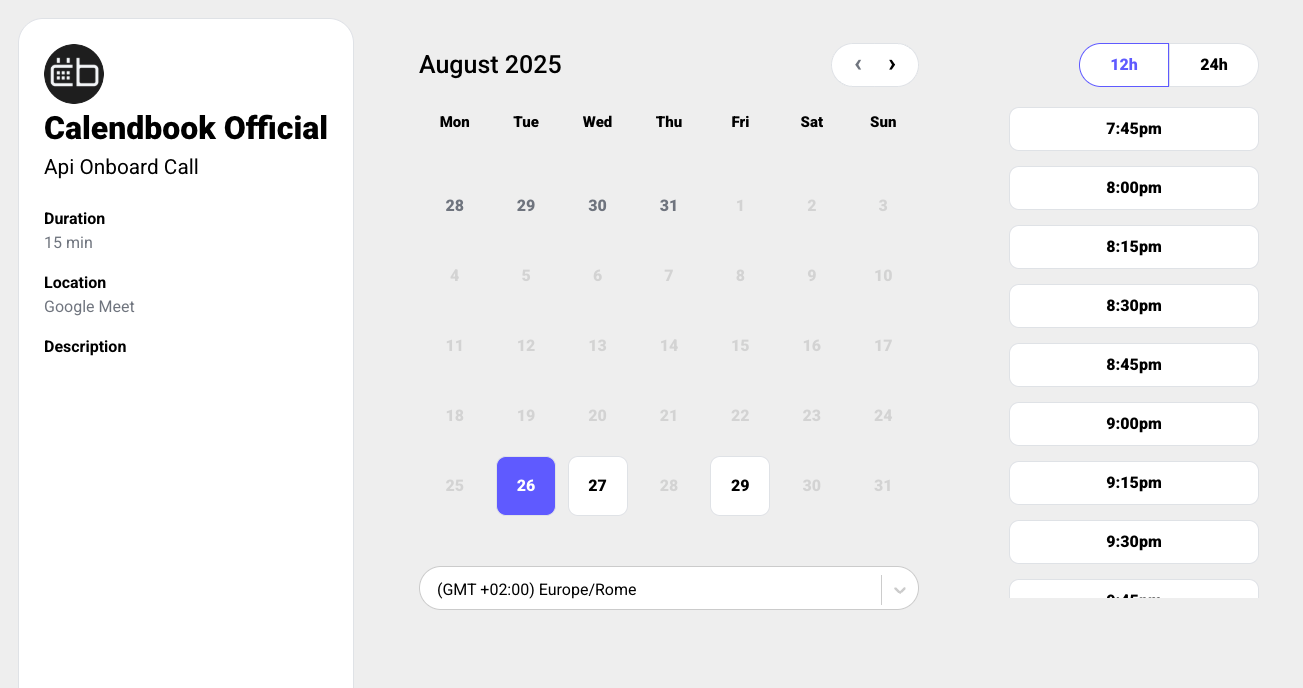
A Booking is created when a guest reserves a specific time slot for a specific event owned by a specific user.It contains details such as:
- The booked date and time
- The owner of the event
- The event type
- Guest information (name, email, timezone)
- Optional notes
In short:
Event → defines the type of meeting.
Availability → defines when that meeting can happen.
Booking → confirms a guest’s chosen time slot.
Event → defines the type of meeting.
Availability → defines when that meeting can happen.
Booking → confirms a guest’s chosen time slot.